
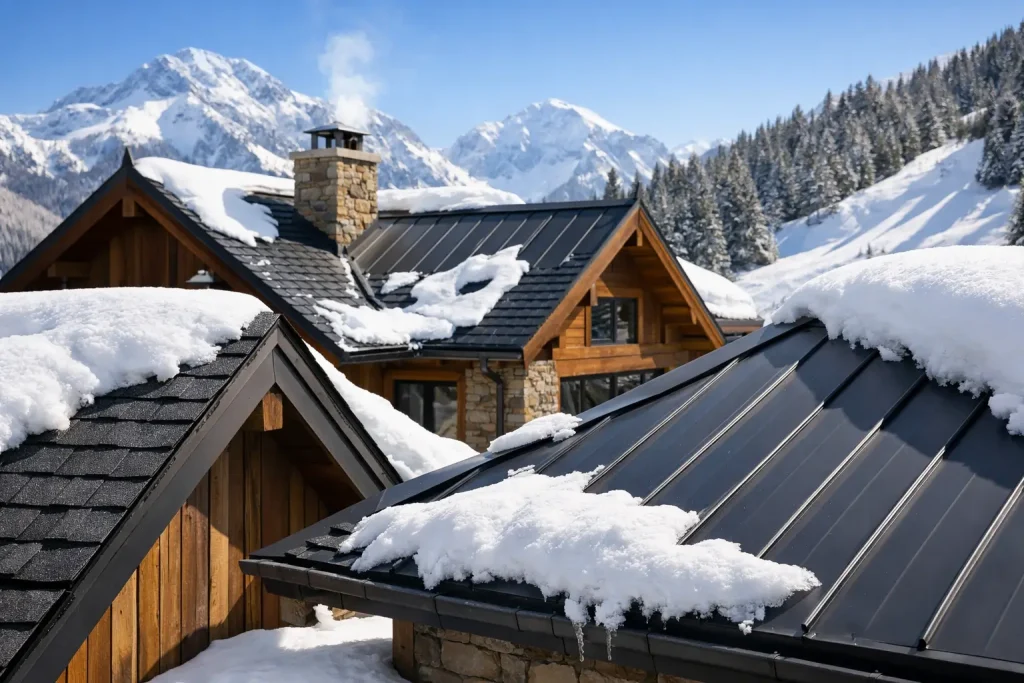
When a Utah storm drops heavy snow overnight, your roof has to do a lot more than just keep water out. It has to carry weight, shed moisture, handle freeze-thaw cycles, and stand up to ice, wind, and sun. That is why homeowners often ask about the best roofing material for snow before they replace an aging roof or build a new home.
The honest answer is not the same for every house. Roof pitch, attic ventilation, budget, neighborhood style, and how long you plan to stay in the home all matter. Still, some materials clearly perform better than others in snowy climates, especially across Utah where winter weather can change fast and roofs see everything from powder to ice buildup.
What makes the best roofing material for snow?
A snow-friendly roof needs to do three things well. First, it has to support snow load without premature wear or structural stress. Second, it should shed snow and melting water efficiently so moisture does not back up under the roofing system. Third, it needs to handle repeated temperature swings, because snow during the day and freezing temperatures at night can be hard on roofing materials.
That means the best choice is usually not just about the outer material. Underlayment, flashing, ventilation, and installation quality all play a major role. A great product installed poorly can become a problem fast. A solid system, installed correctly, gives you much better protection through the winter.
Metal is often the best roofing material for snow
If you want the short answer, metal roofing is often the best roofing material for snow. It is durable, sheds snow well, and performs especially well on homes that deal with repeated winter storms.
Because the surface is smooth, snow is more likely to slide off instead of building up for long periods. That can reduce stress on the roof structure and lower the chance of standing moisture. Metal roofing also holds up well against freeze-thaw conditions, and quality systems can last for decades.
That said, metal is not perfect for every home. It usually costs more upfront than asphalt shingles, and snow sliding off too quickly can create safety concerns near walkways, driveways, decks, or entry points. In many cases, snow retention systems are added to help control how snow releases from the roof. The roof may still perform very well, but the design has to be thought through.
For Utah homeowners planning to stay in their home long term, metal is often worth serious consideration. The upfront investment is higher, but the durability and cold-weather performance can make it a smart value over time.
Asphalt shingles are a practical choice for many homes
Asphalt shingles remain one of the most common roofing materials for a reason. They are affordable, widely available, and can perform well in snowy climates when installed as part of a complete roofing system.
For many homeowners, architectural shingles offer the best balance of cost and performance. They are heavier and more durable than basic 3-tab shingles, and many are designed to resist wind, moisture, and impact better than entry-level products. With the right underlayment and good attic ventilation, an asphalt shingle roof can handle Utah winters well.
The trade-off is lifespan and snow shedding. Shingles do not shed snow as easily as metal, and they can be more vulnerable to long-term wear from ice dams, trapped moisture, and repeated freeze-thaw expansion. Lower-cost shingles are especially likely to show their age faster in harsher conditions.
If budget is a major factor, asphalt shingles are often the most practical route. The key is choosing a quality product and making sure the roof is installed correctly, especially around valleys, eaves, and flashing details where winter moisture tends to cause problems.
What about slate, tile, and synthetic roofing?
Slate is extremely durable and can perform well in snow, but it is heavy and expensive. Not every home is built to support that weight without structural upgrades. It also requires skilled installation, which can raise the total project cost even more. For most homeowners, slate is more of a premium choice than a standard recommendation.
Clay and concrete tile can also last a long time, but snow and freeze-thaw conditions can make them less ideal in some climates. Certain tile products hold up better than others, but the material is heavy, and individual tiles can crack if conditions are right. In Utah, tile can work on the right home, but it is not usually the first material recommended specifically for snow performance.
Synthetic roofing products are worth a look if you want the appearance of slate or shake without the same weight. Some synthetic options are engineered for impact resistance and cold-weather durability. Quality varies by manufacturer, so this category depends more on the specific product than the material label alone.
Roof design matters as much as the material
A roof does not perform in winter based on material alone. Slope plays a major role. Steeper roofs tend to shed snow better, while low-slope areas can hold moisture longer and require different protection methods. Valleys, dormers, skylights, chimneys, and roof transitions also create spots where snow and ice can collect.
That is why two homes with the same roofing product may perform very differently. A simple roofline with strong ventilation and proper flashing usually handles winter better than a complicated roof design with multiple problem areas.
Attic insulation matters too. Heat escaping through the roof can melt snow unevenly, which often leads to refreezing at the eaves. That is one of the main causes of ice dams. Homeowners sometimes blame the shingles when the real issue is poor ventilation or insulation inside the home.
Best roofing material for snow in Utah conditions
Utah weather adds a few extra considerations. Homes here may deal with heavy mountain snow, strong sun exposure, sudden temperature changes, wind, and occasional hail. A roof needs to handle all of that, not just snow accumulation.
For many Utah homes, standing seam metal roofing is one of the strongest all-around options for winter performance and long-term durability. It sheds snow well, resists weather damage, and handles temperature swings better than many materials. It is especially attractive for homeowners who want a long-term solution and do not mind the higher upfront cost.
Architectural asphalt shingles are still a very solid choice for homeowners who want dependable protection at a more accessible price point. When paired with ice and water shield in vulnerable areas, proper attic ventilation, and quality workmanship, they can perform very well through Utah winters.
In other words, the best answer often comes down to this. If your priority is top-tier snow performance and long-term value, metal is usually the leader. If your priority is balancing affordability, appearance, and solid winter protection, architectural shingles are often the better fit.
How to choose the right option for your home
The best roofing decision starts with the condition and design of your current roof. If your roof has had ice dam issues, leaks near valleys, or repeated winter wear, it makes sense to look beyond just replacing the top layer with the same product again. You may need ventilation upgrades, better underlayment, or changes to flashing details to solve the real problem.
Budget matters, but so does timing. If you are planning to move in a few years, a high-quality shingle roof may make more financial sense. If this is your long-term home and you want fewer worries during winter, metal may be the better investment.
It also helps to think about maintenance and appearance. Some homeowners prefer the traditional look of shingles in their neighborhood. Others want the longevity and cleaner snow-shedding performance of metal. Neither choice is wrong if the roof system is built for your specific home.
At Big West Roofing, this is usually where a professional inspection brings the most value. A roof can look fine from the ground and still have weak points that show up every winter. Getting clear answers about structure, ventilation, flashing, and material options makes it easier to choose with confidence instead of guessing.
If you are weighing roof replacement options before the next storm season, the right question is not just which material is strongest on paper. It is which roofing system will protect your home, your budget, and your peace of mind when the snow starts piling up again.