
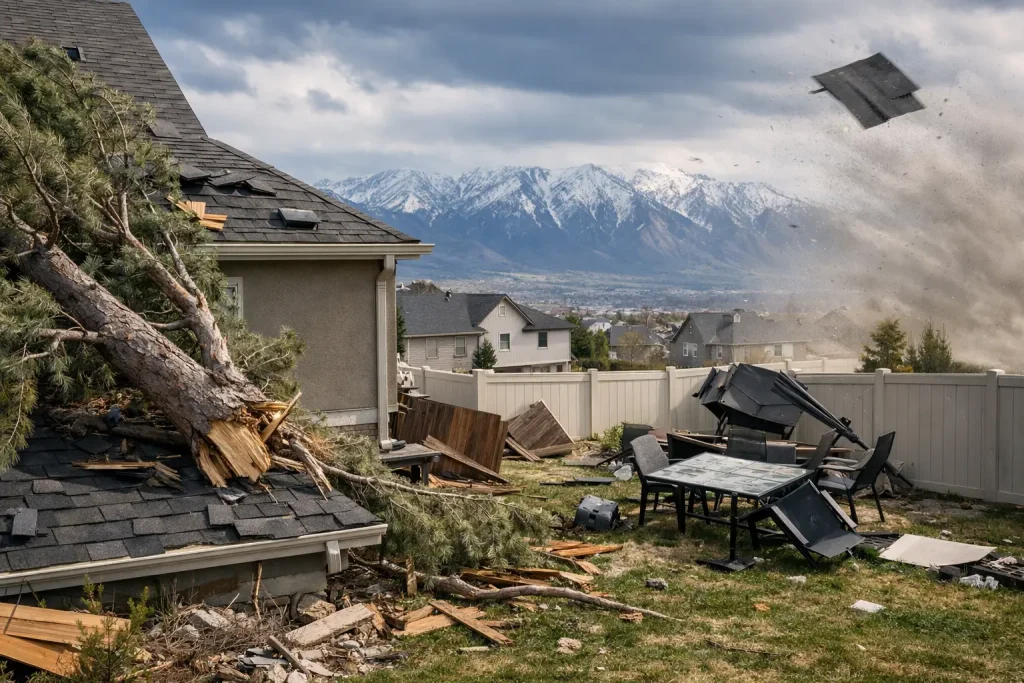
A roof does not have to lose half its shingles to have serious wind damage. In Utah, a strong storm can lift edges, loosen flashing, bend gutters, and create small openings that let water in days later. Many homeowners do not realize there is a problem until they spot a stain on the ceiling or find granules piling up near a downspout.
That is what makes wind damage tricky. Some issues are obvious right away, like shingles in the yard or a branch on the roof. Others are quieter. A tab may lift and settle back down. Ridge caps can loosen without falling off. Siding can shift just enough to let moisture reach the wall underneath. If the damage is missed early, a repair that could have been simple may turn into a more expensive roof and exterior project.
Why wind damage is easy to overlook
Wind does not always leave behind dramatic signs. On asphalt shingle roofs, one of the most common problems is lifted or creased shingles. From the ground, the roof may still look mostly intact. But once a shingle seal breaks, it becomes more vulnerable during the next storm. That next gust can tear it off completely or let water work underneath it.
The same pattern shows up on other exterior surfaces. Metal panels can loosen at seams or fasteners. Membrane roofing can pull at edges and corners. Gutters can separate from the fascia just enough to affect drainage without collapsing. Fascia and soffit pieces can shift or crack, especially on older homes or buildings with existing wear.
In Utah, this matters because weather often comes in cycles. A windy day may be followed by rain, hail, or a temperature swing. Once the protective outer layer is compromised, the rest of the system has less margin for error.
The most common signs of wind damage
The clearest sign is missing roofing material, but there are plenty of others worth watching for. Curled, lifted, or creased shingles are a red flag. So are exposed nail heads, bent flashing, displaced ridge caps, and piles of shingle granules in gutters or on the ground.
You may also notice less direct clues. A new drip line near fascia boards, a gutter that suddenly overflows, or water marks in the attic after a storm can all point back to wind damage. On siding, look for loose panels, gaps at seams, or corners that no longer sit flat. Around the roofline, soffit panels that rattle or shift during wind are worth attention too.
Commercial property owners often see a slightly different set of problems. Membrane edges can peel, rooftop units can stress surrounding flashing, and loose fasteners on metal roofing can create small but costly openings. The issue is not always the size of the damage. It is how quickly water and weather can take advantage of it.
What wind actually does to a roof system
Wind pressure does more than push from the side. It also creates uplift. As air moves over the roof, it can pull upward on shingles, panels, and flashing. Roof edges, corners, and ridges usually take the most stress. If materials were already aging, poorly fastened, or weakened by prior hail or sun exposure, they are much more likely to fail.
That is why two homes on the same street can come through the same storm with very different outcomes. Age matters. Installation quality matters. Ventilation and attic moisture history can matter too, because they affect how well the roof deck and roofing materials hold up over time.
This is also why a quick visual check from the driveway only tells part of the story. A roof may look fine until someone gets close enough to see lifted tabs, torn seal strips, or separated flashing joints.
What to do after suspected wind damage
Start with safety. If there are downed power lines, large branches, or obvious structural concerns, keep your distance and deal with the immediate hazard first. If the roof is actively leaking, move belongings out of the way and contain the water as best you can inside.
After that, document what you can from the ground. Take photos of missing shingles, bent gutters, debris impact, fallen fence sections, or anything else connected to the storm. If you can safely see into the attic, check for damp insulation, staining, or visible daylight near roof penetrations.
Then schedule a professional inspection. This is where homeowners often save themselves time and money. A trained roofer can identify whether the issue is limited to a repair, whether multiple exterior components were affected, and whether the damage appears consistent with an insurance claim.
Trying to wait it out can be costly. A small area of wind damage may not leak right away, especially in dry conditions. But once the next storm hits, the vulnerable area often gets worse fast.
Repair or replace? It depends on the condition of the roof
Not every case of wind damage means you need a full roof replacement. If the damage is isolated and the roof is otherwise in good shape, a targeted repair may be the right move. Replacing a section of shingles, securing flashing, or reattaching gutter components can restore protection without a major project.
But there are trade-offs. If the roof is older, has widespread lifting, or has already been repaired several times, another patch may only buy limited time. Matching shingles can also be difficult on aging roofs. In those cases, replacement may be the more practical investment, especially if it reduces the chance of repeated leaks and emergency repairs.
The honest answer is that it depends on the roof’s age, the extent of the storm impact, and how much useful life is left. A good contractor should explain both options clearly, not push the bigger job by default.
Insurance questions homeowners often have
One of the first questions after wind damage is whether insurance will help. In many cases, it can, but the details matter. Coverage depends on the policy, the cause of loss, the age and condition of the roof, and how quickly the damage is reported.
Documentation helps. Photos from right after the storm, notes about when the issue was discovered, and a professional inspection report can all support the process. It also helps to know that insurance companies may look closely at whether the damage was sudden storm-related damage or long-term wear and neglect.
This is one reason local support matters. A contractor familiar with storm restoration can help identify storm-created issues, explain the scope of damage in plain language, and provide the information needed for the claim process. For busy homeowners, that kind of clarity can make a frustrating situation much easier to manage.
Why fast action matters in Utah
Utah weather can change quickly, and that puts pressure on damaged roofing systems. A loosened shingle might survive one dry week and fail the next. Freeze-thaw cycles, blowing rain, and continued wind can widen small openings before they are visible inside the home.
Fast action does not always mean a full project starts the same day. It means getting the roof inspected quickly, protecting exposed areas if needed, and making a clear plan. Sometimes that plan is a simple repair. Sometimes it is a temporary fix followed by a larger replacement once materials and insurance steps are lined up.
For homeowners trying to protect both the house and the budget, speed and accuracy matter more than panic. The goal is to catch the real problem before it spreads.
A local approach makes a difference
Wind damage is not just a roofing issue. It can affect gutters, fascia, soffit, siding, and even solar components depending on the property. Looking at the full exterior matters because one damaged section often affects another. Water that gets behind roofing materials may show up at trim lines or wall surfaces before it appears in the living space.
That is why a full inspection is often more useful than a narrow fix. A local contractor who understands Utah weather patterns, common roofing systems, and how storm damage presents in this area can usually spot concerns that a rushed visit might miss. At Big West Roofing, that customer-first approach means helping property owners understand what happened, what needs attention now, and what can reasonably wait.
If you suspect wind damage, the best next step is not guessing from the ground or hoping the next storm passes you by. It is getting a clear look at the roof and exterior so you can make a confident decision before a small problem turns into a bigger one.