
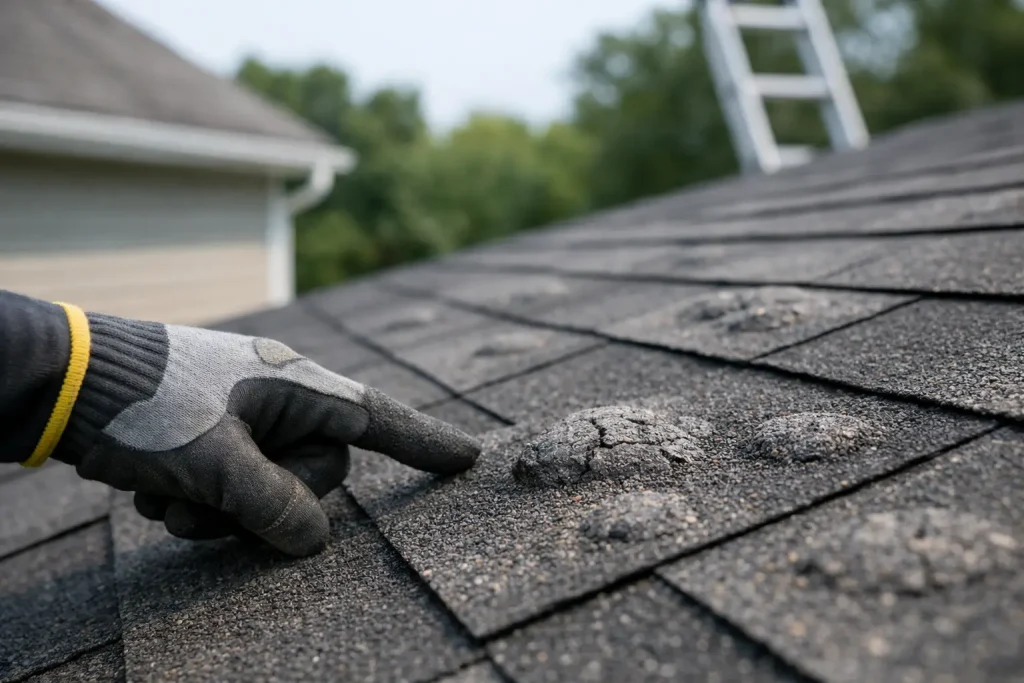
A roof can look fine from the driveway and still be hiding early signs of trouble. Blistering is one of those problems homeowners often miss until the damage becomes harder and more expensive to fix. If you have asphalt shingles or a low-slope roofing system, small bubbles, raised spots, or areas that look uneven may be the first clue that your roof is under stress.
The good news is that blistering does not always mean you need a full roof replacement right away. The real question is what caused it, how widespread it is, and whether your roof is still protecting your home the way it should. That is where a careful inspection matters.
What blistering means on a roof
Roof blistering happens when pockets of air or moisture become trapped within roofing materials and then expand. On asphalt shingles, this may show up as small puffy areas or spots where the surface granules have popped off. On membrane roofing, blistering can appear as raised bubbles or soft lifted sections in the membrane.
In simple terms, the roofing material is separating or swelling where it should be lying flat and sealed tight. Sometimes the issue stays cosmetic for a while. In other cases, it can shorten the life of the roof and open the door to leaks, cracking, or premature wear.
For homeowners, the challenge is that blistering is easy to confuse with normal aging, hail impact, or surface scuffing. That is why it helps to have someone look at the full condition of the roof rather than focusing on one spot.
What causes roof blistering
Blistering usually comes from heat, moisture, poor ventilation, or installation issues. Sometimes it is one clear cause. More often, it is a combination.
Utah homes deal with strong sun, hot summer temperatures, sudden weather shifts, and winter conditions that put roofing systems through a lot. When roofing materials heat up and cool down over and over, trapped moisture or volatile compounds can expand and create pressure inside the material.
Heat buildup and attic ventilation
One of the most common contributors to blistering is excessive heat. If an attic is not ventilating properly, heat can build beneath the roof deck and stress the shingles from below. Add direct summer sun from above, and the roofing material takes a beating from both directions.
This does not mean every warm attic causes blistering, but poor airflow can absolutely speed up aging and make existing weaknesses worse. Ventilation issues also tend to affect the whole roofing system, not just one isolated shingle.
Moisture trapped in the roofing system
Moisture is another major factor. If water vapor becomes trapped in the roof assembly, it can expand when temperatures rise. That pressure may create blisters in shingles or membrane surfaces.
Moisture can come from a roof leak, condensation, wet materials during installation, or inadequate attic airflow. This is one reason blistering should never be brushed off as purely cosmetic without checking what is happening underneath.
Aging materials and manufacturing variation
As roofs get older, their materials lose flexibility and resilience. Older shingles may be more likely to blister, crack, or shed granules. In some cases, the issue can relate to how the roofing material was manufactured, especially if certain sections show unusual wear compared with the rest of the roof.
That said, homeowners should be careful not to assume the product itself is always to blame. Installation quality, ventilation, and climate all play a role.
Installation problems
Improper installation can contribute to blistering too. Roofing materials installed over damp surfaces, poorly prepared decking, or incompatible underlayment conditions may not perform the way they should.
On low-slope and commercial roofs, blistering can also happen when layers do not bond correctly or when moisture gets trapped during application. This is one reason roof work should always be done with close attention to weather conditions and system details, not just speed.
Is blistering serious?
Sometimes yes, sometimes no. That is the honest answer.
A few minor blisters on an aging roof may not require immediate replacement. If the roof is otherwise sound, with no active leaks and no widespread failure, a contractor may recommend monitoring it and addressing any related ventilation or maintenance issues.
But widespread blistering is different. If many shingles are affected, if granules are missing, if the membrane is lifting in multiple places, or if the roof feels soft and compromised, the problem can be more than cosmetic. At that point, your roof may be losing years off its service life.
The biggest concern is not the blister itself. It is what the blister tells you about heat, moisture, adhesion, and overall system health.
How blistering affects different roof types
Not all roofs blister in the same way.
Asphalt shingle blistering
With asphalt shingles, blistering often starts as small raised spots on the surface. Over time, these spots can burst, leaving behind bare patches where protective granules have fallen away. Once granules are gone, UV exposure can break down the shingle faster.
That does not automatically mean water is entering right away, but it does mean the shingle is more vulnerable. If enough shingles are affected, repair may become less practical than replacement.
Membrane roof blistering
On flat or low-slope roofs, blistering in membrane systems can be more noticeable. You may see round raised sections or bubbles under the membrane. These areas can be at greater risk of splitting, especially with foot traffic, pooled water, or freeze-thaw cycles.
Commercial property owners should pay close attention here. What looks like a small bubble can turn into an entry point for water if it ruptures.
Signs homeowners should watch for
Most people do not climb onto their roof, and that is a good thing. Still, there are a few signs you can spot from the ground or around the house.
Look for uneven or bubbled areas in the roofline, patches that seem smoother or darker where granules may be missing, and any sections that appear to be aging faster than the rest of the roof. Inside the home, keep an eye out for ceiling stains, musty attic smells, or insulation that looks damp.
If your energy bills have jumped and your upstairs feels hotter than usual, it may also be worth asking whether attic ventilation is part of the problem.
What to do if you notice blistering
Start with an inspection, not a guess. Blistering is one of those issues where the right next step depends on what is causing it.
A professional roof inspection should look at the shingles or membrane, attic ventilation, underlayment condition, moisture signs, flashing, and any storm-related damage. If there has been hail or wind in your area, that matters too, because impact damage can sometimes be mistaken for blistering or make an existing issue worse.
In many cases, the best solution is not just replacing the visible damaged area. If the root cause is trapped moisture or poor ventilation, the repair needs to address that as well or the same issue can come back.
For Utah homeowners, fast action matters. Dry conditions can make surface damage seem harmless, but weather can turn quickly, and winter exposure has a way of turning a manageable roof problem into interior damage.
Can roof blistering be repaired?
Sometimes. If blistering is limited to a small area and the rest of the roof is in good condition, a targeted repair may make sense. That could include replacing damaged shingles, repairing a membrane section, or correcting a related ventilation issue.
If the blistering is widespread, repair may only delay a larger problem. In that case, replacement may be the more cost-effective option over time. No homeowner wants to hear that, but patching a failing roof again and again usually costs more than dealing with the issue properly.
A trustworthy contractor will explain the trade-offs clearly. There is a big difference between a roof that needs a few corrections and one that is nearing the end of its service life.
Preventing blistering before it starts
Prevention is usually less expensive than repair. Good attic ventilation, quality installation, dry materials, and regular inspections all help reduce the risk of blistering.
After major storms, it is smart to have your roof checked even if you do not see obvious damage. And if your roof is older, routine inspections can catch early signs of wear before they spread. A family-run company like Big West Roofing often sees the same pattern with local homes – small roofing issues are much easier to handle when they are found early.
Blistering is not always an emergency, but it is never something to ignore. If your roof is showing signs of bubbles, lifted areas, or unexplained granule loss, the most helpful move is to get clear answers while the problem is still manageable.