
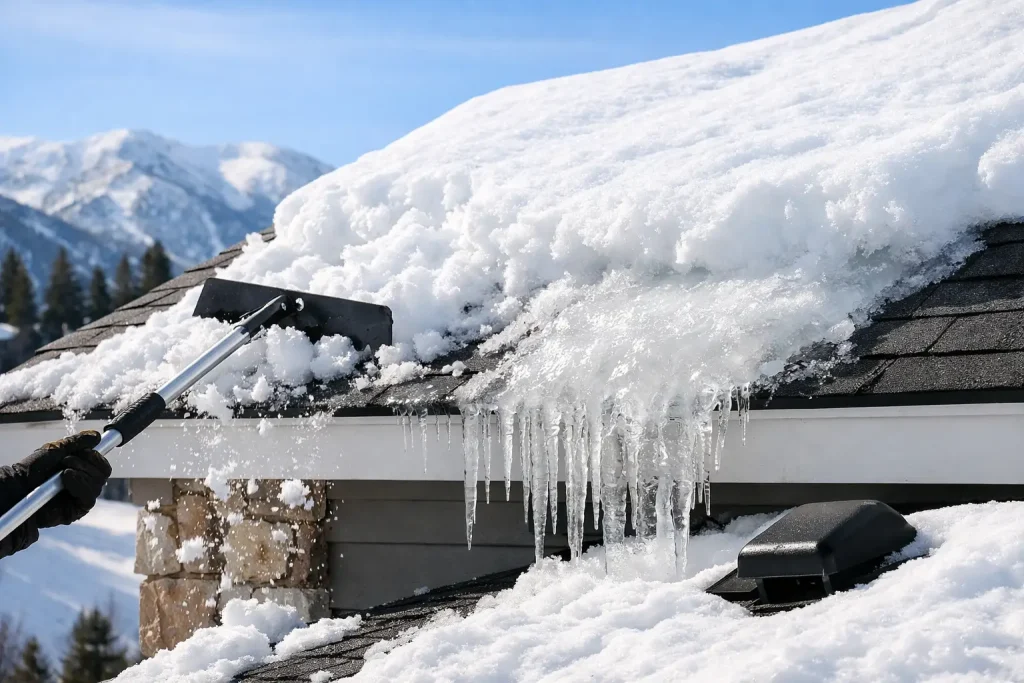
A row of icicles along the eaves may look harmless after a Utah snowstorm, but it can be the first warning sign of an ice dam. Once water begins backing up beneath shingles, a small winter problem can turn into stained ceilings, damaged insulation, peeling paint, and expensive roof repairs. Knowing how to prevent ice dams starts with understanding why snow melts unevenly on a roof.
An ice dam is not usually caused by snow alone. It is caused by heat escaping from the home, warming the upper roof while the eaves remain cold enough to refreeze the runoff. The goal is simple: keep the roof deck as consistently cold as possible while giving moisture and meltwater a safe path away from the home.
What causes ice dams on Utah homes?
During the day, sunlight and heat from inside the home can melt snow higher up on the roof. That water runs down toward the overhangs, where there is less heat from the house below. When temperatures are below freezing, the water turns to ice at the eaves. As the ice thickens, it forms a ridge that traps more melting snow behind it.
That trapped water has nowhere to go except sideways and upward. It can work under shingles, around flashing, and into vulnerable areas near valleys, skylights, chimneys, and roof penetrations. A newer roof can still develop ice dams if attic insulation, air sealing, or ventilation is not doing its job.
Utah homes are especially vulnerable during stretches of cold weather followed by bright sunshine. The roof may look clear in some spots and heavily snow-covered in others. That uneven snow pattern is often a useful clue that warm air is escaping through the attic.
How to prevent ice dams before winter arrives
The most reliable prevention happens before the first major snowfall. Snow removal can help during a storm, but a roof system that controls heat and moisture is what reduces recurring ice-dam trouble year after year.
Start with attic air sealing and insulation
Warm air leaks into the attic through gaps around recessed lights, plumbing vents, attic hatches, wiring openings, bath fans, and framing connections. Even small gaps can send enough warm air upward to melt snow on the roof.
Air sealing should come first because insulation alone does not stop warm air from moving through openings. Once leaks are sealed, adequate insulation helps hold conditioned air inside the living space instead of letting it warm the attic. The right insulation level depends on the home, its construction, and existing materials, but an attic that feels noticeably warm in winter deserves a closer look.
Watch for signs such as uneven snow melt, frost on attic nails, cold rooms beneath the attic, or unusually high heating bills. These can point to insulation or air-leak issues that affect both comfort and roof performance.
Make sure the attic can ventilate properly
A healthy attic needs balanced intake and exhaust ventilation. Intake vents near the soffits bring in cold, dry air. Exhaust vents near the ridge or upper roof allow warmer, moist air to leave. Together, they help keep the roof deck closer to the outside temperature.
Ventilation is not a substitute for insulation and air sealing. In fact, adding more roof vents without addressing heat leaks may not solve the problem. Soffit vents can also be blocked by insulation, paint, debris, or improper baffles, limiting airflow before it even begins.
A roofing professional can check whether your intake and exhaust ventilation are balanced and whether the layout matches your roof design. This matters on complex roofs, where dormers, valleys, multiple levels, and finished attic spaces can create areas that do not ventilate evenly.
Keep gutters and downspouts clear
Gutters do not cause every ice dam, but clogged gutters can make winter drainage worse. Leaves, roof grit, and debris hold water at the roof edge, where it can freeze and add to an existing ice buildup. Before winter, clean gutters and make sure downspouts are secure and directing water away from the foundation.
If gutters are loose, pulling away from the fascia, or sagging under debris, repair them before snow adds extra weight. The trade-off is that gutter guards can reduce leaf buildup, but some designs still collect fine debris or allow ice to form. They are helpful in the right situation, not a complete ice-dam solution.
Repair roof vulnerabilities while they are dry
Missing shingles, worn flashing, cracked pipe boots, and loose metal edges may not create an ice dam, but they give backed-up water an easier way into the home. A fall roof inspection can identify these trouble spots before snow makes them difficult to access.
For homes with a history of ice dams, a roofer may recommend ice and water shield during a roof replacement or repair in affected areas. This self-adhering underlayment provides an added layer of protection beneath shingles near eaves, valleys, and other vulnerable details. It is a valuable safeguard, but it should support good insulation and ventilation rather than replace them.
What to do when snow is already on the roof
If ice is forming at the eaves, focus on reducing snow buildup safely. Use a roof rake from the ground to pull snow off the lower edge of the roof. Removing the first few feet of snow can limit the amount of meltwater reaching the cold eaves.
Do not climb onto an icy roof, chop at the ice with a shovel, or use picks, hammers, and sharp tools. Those methods can damage shingles, gutters, and flashing, while putting you at serious risk of a fall. Avoid spreading salt or chemical de-icers directly on a roof as well, since they can harm roofing materials, landscaping, and metal components.
For a severe dam, roof-safe calcium chloride may sometimes be used in fabric-filled channels to create a path for water, but it must be handled carefully. This is generally a short-term emergency measure, not a fix for the underlying cause. If water is entering the house or ice is pulling on gutters, call a qualified roofing contractor promptly.
Signs an ice dam is causing damage
The first sign may be water spots on a ceiling or wall near an exterior edge of the home. You may also notice damp insulation, bubbling paint, dripping around window trim, or a musty odor in the attic. Outside, thick ice at the eaves, bent gutters, and large icicles near roof valleys deserve attention.
Not every roof leak during winter is an ice dam. Wind-driven rain, damaged flashing, failed shingles, and plumbing leaks can create similar symptoms. That is why an inspection matters. The right repair depends on where water is entering and whether the roof, attic, gutters, or exterior details are contributing to the problem.
When professional help is worth it
A one-time small ice buildup may be manageable with safe snow removal and better gutter maintenance. Repeated ice dams, interior leaks, uneven roof snow melt, or attic moisture are different. They usually point to a system issue that needs more than a quick fix.
A professional inspection can assess the roof covering, flashing, attic ventilation, insulation conditions, soffits, fascia, and gutters as one connected system. For homeowners in Utah, Big West Roofing can help identify winter roof concerns early and explain practical repair or replacement options clearly.
Your roof should shed winter weather, not hold it against your home. Addressing heat loss and drainage before the next freeze gives you a better chance of enjoying the snowfall without worrying about what is happening above the ceiling.