
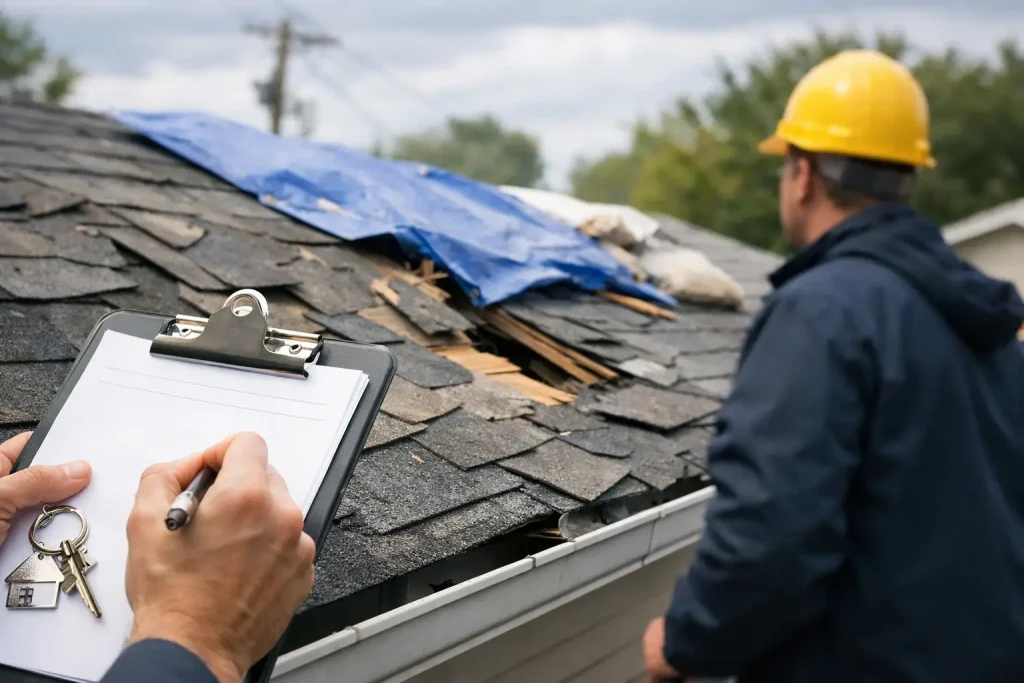
A Utah hailstorm can leave a roof looking mostly normal from the driveway while damaging shingles, flashing, vents, and gutters above. If you are searching for how to file roof claim paperwork after a storm, the goal is not to rush into a decision. It is to protect your home, document what happened, and give your insurance company a clear, accurate picture of the damage.
A well-handled claim can make the difference between a repair that restores your roof properly and a stressful process full of delays. Start with safety, keep good records, and work with a qualified local roofing professional who can explain the condition of your roof in plain language.
Start With Safety and Temporary Protection
After wind, hail, heavy snow, or a fallen branch, check your home from the ground first. Look for missing shingles, bent gutters, pieces of flashing, fallen debris, or water stains on ceilings and walls. Do not climb onto a damaged roof yourself. Wet surfaces, loose shingles, and hidden structural damage can make an inspection dangerous.
If water is actively entering the home, take reasonable steps to prevent additional damage. Move belongings away from the leak, place a container under dripping water, and use a tarp only if it can be installed safely by a professional. Most insurance policies expect homeowners to prevent further loss when possible, but that does not mean you should make permanent repairs before the claim is documented.
Save receipts for emergency mitigation, such as a professional tarp or water removal service. Those expenses may be part of your claim, depending on your policy.
Document the Damage Before Repairs Begin
Documentation gives your claim a starting point. Take date-stamped photos and video from the ground of visible damage to your roof, siding, gutters, fencing, windows, and exterior equipment. Inside, photograph ceiling stains, wet insulation, peeling paint, or damaged personal property.
It also helps to write down the date and approximate time of the storm, what you observed, and when the leak or damage first appeared. If neighbors had similar hail or wind damage, that can support the fact that a damaging weather event occurred, though your insurer will still evaluate your property individually.
Avoid throwing away damaged materials until your adjuster or roofing contractor has had a chance to review them. Keep all estimates, invoices, emails, and claim-related notes together. A simple folder, either physical or digital, can prevent confusion later.
Review Your Policy and Deductible
Before opening a claim, find your homeowners insurance declarations page. It should show your deductible and the types of coverage you carry. Roof claims often involve deductibles that are a set dollar amount or a percentage of the home’s insured value. In Utah, some policies also have separate wind or hail deductibles.
Read the policy language or call your insurance carrier with questions about coverage. Ask whether your roof is covered at replacement cost value or actual cash value. Replacement cost value generally pays the covered cost to repair or replace the roof, subject to the deductible and policy terms. Actual cash value factors in depreciation, which can leave you with more out-of-pocket cost on an older roof.
Insurance is designed for sudden, accidental damage from covered events. It generally does not cover normal aging, poor maintenance, old leaks, or worn-out shingles. That is why a professional inspection before filing can be helpful. If the damage is minor and below your deductible, filing a claim may not make financial sense.
Get a Professional Roof Inspection
A qualified roofing contractor can inspect areas that are hard to evaluate from the ground, including shingle impact marks, lifted tabs, compromised flashing, damaged ridge caps, and punctures around vents. Hail damage can be subtle, especially on asphalt shingles, and wind damage may not become obvious until water finds its way beneath loosened materials.
At Big West Roofing, we provide free roof inspections to help homeowners understand what they are dealing with before they make their next move. A contractor should explain whether the roof needs a repair, a full replacement, or monitoring after a storm. They should also identify related exterior damage, such as damaged gutters, fascia, or siding.
An inspection is not a guarantee that insurance will approve a claim. The insurance company makes that decision. But a detailed inspection gives you useful information and helps ensure damage is not overlooked.
File the Claim Promptly and Clearly
Once you believe the damage may exceed your deductible and your policy may cover it, contact your insurance carrier to begin the claim. Many carriers allow claims by phone, online, or through a mobile app. Report the date of loss accurately and describe only what you know.
For example, you might say that hail occurred on a certain date, you noticed granules in the gutter and water staining in an upstairs bedroom, and a roofing inspection found storm-related damage. Do not guess about the cause or the cost of repairs if you do not have the information yet.
When the claim is opened, record the claim number, the adjuster’s name, and the best contact information for your insurance company. Ask about the next steps, inspection timing, and any deadlines for submitting documents. Claims often have reporting windows, and waiting too long can complicate the process.
Meet the Adjuster Prepared
Your insurer will usually assign an adjuster to inspect the property or review documentation. Be available if possible, and ask your roofing contractor to be present during the inspection. A contractor can point out documented roof conditions, explain the scope of visible damage, and help make sure the adjuster can safely access the relevant areas.
The contractor should not tell you what your insurer must pay or promise claim approval. Their role is to provide a professional assessment and a detailed estimate for the work needed to restore the roof. Your adjuster determines coverage based on your policy, the cause of damage, and the inspection findings.
After the inspection, ask for a copy of the insurance estimate. Review it carefully with your contractor. Roof estimates can include more than shingles. Depending on the damage and local building requirements, the scope may involve underlayment, flashing, ventilation, drip edge, ice and water protection, gutters, or code-related work. If something necessary is missing, your contractor can provide documentation for a supplement request.
Understand the Settlement Before Signing a Contract
Insurance payments are often issued in stages. The first payment may reflect actual cash value, with recoverable depreciation paid after the covered work is completed and documented. Your deductible remains your responsibility. No reputable contractor can legally waive it by hiding the cost elsewhere.
Before choosing a roofer, compare more than the bottom-line price. Confirm the scope of work, materials, workmanship warranty, cleanup plan, schedule, and how unexpected repairs will be handled. A low estimate may leave out essential items that protect your roof from future leaks.
Be cautious after major storms. Door-to-door contractors may pressure homeowners to sign immediately or offer deals that sound too good to be true. Choose a local, insured contractor with a track record in your community, clear written communication, and a willingness to answer questions without pressure.
If Your Roof Claim Is Denied or Underpaid
A denial does not always mean the conversation is over. First, read the insurer’s letter closely. It should explain the reason for the decision, such as no storm-related damage found, damage below the deductible, excluded wear and tear, or insufficient evidence of a covered loss.
If you disagree, ask your contractor for a written inspection report, photographs, and an itemized estimate. You can submit additional documentation and request that the carrier review the claim again. Keep the discussion factual and organized. If the policy language is unclear or the dispute is significant, consider speaking with your insurer, an independent public adjuster, or an attorney who understands insurance claims.
Filing a roof claim is less about knowing the perfect phrase to say and more about taking steady, documented steps. Protect the home, get a professional opinion, communicate honestly, and choose repairs that will keep your family dry through Utah’s next storm.