
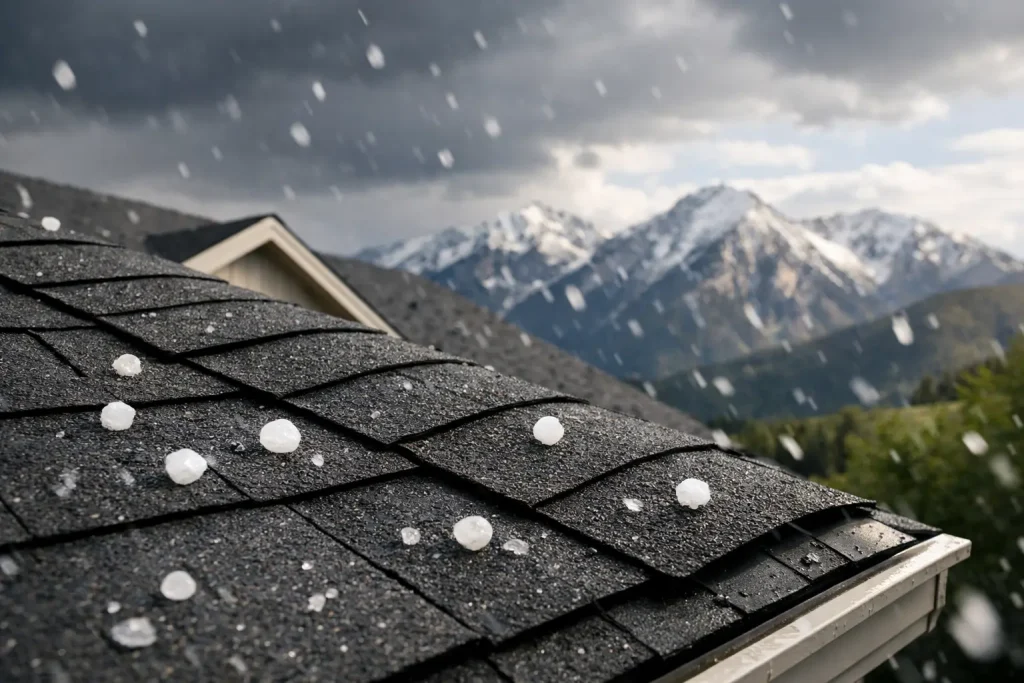
A hailstorm can turn a roof that looked fine on Monday into an insurance claim by Friday. In Utah, where weather can shift fast and storms can hit hard, choosing the best roof shingles for hail is less about chasing a brand name and more about picking the right level of impact resistance for your home, budget, and neighborhood.
The short answer is this: most homeowners should start by looking at Class 4 impact-rated asphalt shingles. They are widely considered the best balance of hail protection, cost, appearance, and availability. But that does not mean they are the right answer for every roof. The best choice depends on roof pitch, exposure, home value, local storm history, and whether you are replacing an older roof after damage or planning ahead before the next storm season.
What makes shingles better against hail?
Hail does not damage every roof the same way. The size of the hail matters, but so do wind speed, the age of the roof, attic ventilation, roof slope, and even how much direct sun the shingles get year after year. Two homes on the same street can end up with very different results after the same storm.
When roofers talk about hail resistance, they are usually talking about impact resistance. Shingles are commonly tested and given ratings, with Class 4 being the highest standard for impact resistance in common residential asphalt products. A Class 4 rating does not mean the roof is hail-proof. It means the shingle performed better in controlled impact testing and is generally more likely to resist cracking, bruising, or granule loss than lower-rated products.
That is an important distinction. No roofing material can promise zero storm damage. What better shingles can do is reduce the chances of severe damage and help your roof hold up longer when storms roll through.
Best roof shingles for hail: what usually works best
For most Utah homes, architectural asphalt shingles with a Class 4 impact rating are the strongest practical choice. They offer a thicker build than basic 3-tab shingles, and many are made with polymer-modified asphalt or reinforced mats that help absorb impact better.
These shingles also make sense because they fit the way many homeowners shop for a roof. They are more affordable than premium materials, they look good on a wide range of homes, and they are easier to repair or replace than some specialty systems. If you want a roof that gives you stronger storm protection without jumping to the cost of metal or slate, this is where the conversation usually starts.
That said, not every Class 4 shingle performs exactly the same in the real world. Manufacturing quality, installation quality, underlayment, ventilation, and flashing details all matter. A high-rated shingle installed poorly can still leave your home vulnerable.
Architectural asphalt shingles
Architectural shingles are the most common upgrade from standard 3-tab products, and for good reason. They are thicker, more dimensional, and generally more durable. In hail-prone areas, they often give homeowners the best mix of value and protection.
If you are comparing options, look for shingles specifically marketed as impact-resistant rather than assuming all architectural shingles have the same performance. Some are built mainly for appearance and wind resistance, while others are designed to stand up better to hail strikes.
Polymer-modified shingles
Among asphalt products, polymer-modified shingles are often the strongest choice for hail. The added rubber-like polymers can help the shingle flex under impact instead of cracking as easily. For homes in areas that regularly see severe storms, this upgrade can be worth the extra cost.
The trade-off is price. These shingles usually cost more than standard architectural products, so the decision often comes down to how long you plan to stay in the home and how often your area gets damaging hail.
Standard 3-tab shingles
If hail resistance is your priority, standard 3-tab shingles are usually not the best fit. They are thinner, lighter, and generally more vulnerable to storm damage as they age. They can still be a budget option for some properties, but they are rarely the first recommendation in areas with repeated hail events.
Are metal roofs better than hail-resistant shingles?
Sometimes, yes. But it depends on what you mean by better.
Metal roofing can perform very well in hailstorms, especially when properly installed. It is durable, long-lasting, and often excellent in harsh weather. But hail can still dent metal panels, and for some homeowners, cosmetic damage matters almost as much as functional damage. If the roof protects the home but ends up visibly dimpled after a storm, that may still be frustrating.
Hail-resistant shingles, on the other hand, may show less obvious cosmetic impact in some cases and often cost less upfront. For many homeowners, asphalt shingles remain the more practical option, especially when appearance, budget, and insurance considerations all come into play.
If you are deciding between metal and shingles, the best choice usually comes down to your priorities. If you want lower upfront cost and a familiar residential look, impact-rated shingles often win. If you want maximum lifespan and are comfortable with a higher investment, metal may be worth a closer look.
What Utah homeowners should pay attention to
Utah roofs deal with more than hail. Strong sun, freeze-thaw cycles, wind, snow load, and temperature swings all affect how shingles age. That means the best roof shingles for hail in Utah should not just resist impact. They should also hold up under year-round weather stress.
This is where product selection and installation details matter. A good shingle on the wrong system can still underperform. Proper attic ventilation helps control heat buildup. Quality underlayment adds another layer of protection. Well-installed flashing around valleys, chimneys, and penetrations can prevent small storm damage from turning into interior leaks.
It is also smart to think about roof age. If your roof is already near the end of its expected lifespan, patching hail damage may not be the most cost-effective move. In that situation, replacement with a more impact-resistant shingle may save money and headaches over time.
How to compare shingles without getting overwhelmed
Homeowners often get buried in product brochures, color samples, and warranty language. The easiest way to narrow the field is to focus on a few practical questions.
First, is the shingle Class 4 impact-rated? Second, is it an architectural or polymer-modified product designed for storm resistance? Third, does the manufacturer have a strong reputation for warranty support? And fourth, is the installer experienced with full roofing systems, not just the shingles themselves?
Warranty language matters, but it should not be your only deciding factor. Warranties can be limited, prorated, and tied to installation requirements. A roof is only as dependable as the workmanship behind it.
When insurance enters the picture
After a hailstorm, many homeowners focus only on visible damage. The problem is that hail damage is not always obvious from the ground. Bruising, granule loss, cracked matting, and damaged soft metals can point to a larger problem that deserves a closer inspection.
If you suspect storm damage, a professional roof inspection is the right next step. An experienced contractor can document damage, explain whether repair or replacement makes more sense, and help you understand what your insurance carrier may look for during the claims process.
This is also where choosing better shingles during replacement can pay off. Some insurers offer discounts for impact-resistant roofing products, though that varies by carrier and policy. It is worth asking before you make a final decision.
The best choice is the one that fits your home
There is no single shingle that is perfect for every house. A newer family home in a storm-prone neighborhood may benefit from a premium Class 4 architectural shingle. A rental property might call for a more budget-conscious option. A long-term homeowner who wants fewer replacements may decide to step up to polymer-modified shingles or even metal.
What matters most is making a decision based on real conditions, not just marketing claims. A roof should match the demands of your area, the age and design of your home, and the level of risk you are trying to avoid.
For many local homeowners, that means starting with a straightforward inspection and an honest conversation about what the roof needs now, what it may need after the next storm, and how to spend wisely. At Big West Roofing, that is usually where the best decisions begin.
If your roof has been through a recent storm or you are planning ahead before hail season ramps up, the right shingle is not just about weather resistance. It is about peace of mind when the clouds roll in again.