
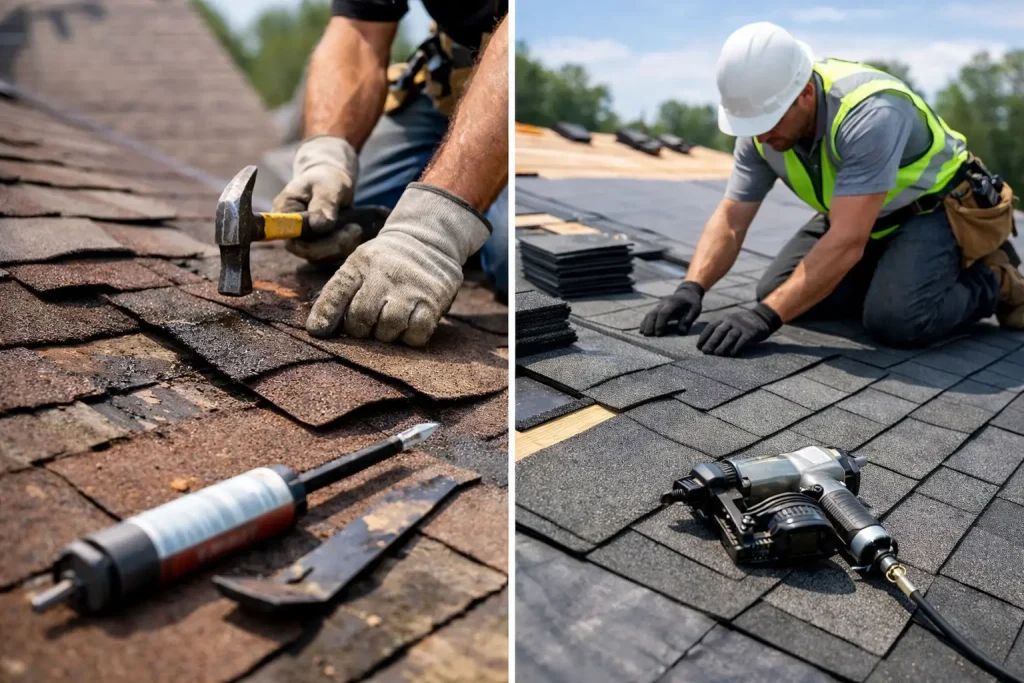
A small ceiling stain can turn into a much bigger question fast: should you patch the problem, or is it time for a full new roof? When homeowners start comparing roof repair vs replacement, they are usually dealing with more than shingles. They are weighing cost, timing, stress, and how much more life they can reasonably expect from the roof they already have.
For Utah homeowners, that decision can get complicated quickly. Snow loads, wind, sun exposure, hail, and temperature swings all put roofing materials to work year-round. A roof that looks mostly fine from the ground can still have hidden trouble underneath. That is why the right answer is rarely based on one missing shingle or one leak alone.
Roof repair vs replacement: the real difference
Roof repair is meant to solve a specific problem while keeping the rest of the roof in place. That might mean replacing damaged shingles, sealing a leak around flashing, fixing a section after storm damage, or addressing a small area of decking or underlayment that has failed. Repair makes the most sense when the issue is limited and the surrounding roof is still in solid condition.
Roof replacement is a bigger reset. Instead of addressing one section, the old roofing system is removed and a new one is installed. That gives homeowners a fresh start with updated materials, a new underlayment system, and the chance to correct broader wear that repairs cannot fully solve. Replacement usually costs more upfront, but it can prevent repeated repair bills on a roof that is already near the end of its lifespan.
The challenge is knowing when one repair is truly one repair, and when it is the beginning of a pattern.
When a roof repair makes sense
A repair is often the smart choice when the damage is isolated and the roof still has good years left. If your roof is relatively newer, the shingles are matching well, and the issue came from a single event like wind or a branch impact, repairing that area can be the most cost-effective move.
Leaks around roof penetrations are a common example. Chimneys, vents, skylights, and valleys are all areas where flashing can wear out before the entire roof does. In those cases, repairing the flashing and the surrounding materials may restore performance without the cost of replacement.
Repair also makes sense when the structure beneath the roofing is still dry and sound. If moisture has not spread, mold is not developing, and the damage has not affected large sections, a targeted fix can protect the home and buy meaningful time.
For many families, timing matters too. If a full replacement is not ideal right now, a well-done repair can stabilize the roof while you plan ahead. That only works if the repair is honest and appropriate. A short-term fix should be presented as a short-term fix, not as a permanent answer when it is not.
Signs your roof may be a good candidate for repair
If most of the roof is in good shape, repair may be enough. That is often true when damage is limited to one area, the roof is under 15 years old, and there are no widespread signs of wear such as curling shingles, major granule loss, soft decking, or repeated leaks in different spots.
Storm damage can also fall into this category. A handful of lifted shingles or a small puncture does not always mean the full roof is done. The key is whether the damage is contained or whether it exposed deeper weaknesses that will continue to show up.
When replacement is the better investment
There comes a point when repairs stop saving money. If your roof needs attention over and over, or if every fix uncovers another problem nearby, replacement often becomes the more practical decision.
Age matters here. Asphalt shingle roofs do not last forever, especially when weather conditions are tough. A roof nearing the end of its expected life may technically be repairable, but that does not mean repair is the best value. Spending money to patch an aging roof can feel cheaper today, yet cost more over the next few years if leaks keep returning.
Widespread wear is another strong sign. If shingles are curling, cracking, losing granules across multiple slopes, or if there are soft spots underfoot, the roof system may be failing as a whole. At that stage, even a quality repair only addresses part of the problem.
Replacement is also worth serious consideration after severe storm damage. Hail and wind do not always damage a roof evenly. What looks cosmetic from the yard can reduce the roof’s ability to shed water and protect the underlayment. If enough of the system has been compromised, replacing it may be safer and more cost-effective than trying to chase damage section by section.
Signs it may be time to replace your roof
If your roof has leaks in multiple areas, visible sagging, repeated repair history, or widespread storm damage, replacement is likely the stronger long-term choice. The same goes for roofs that are simply old enough that matching materials is difficult and repairs will continue to stand out both functionally and visually.
A replacement can also improve curb appeal and resale confidence. Buyers tend to view a newer roof as one less major expense waiting around the corner.
Cost is important, but it is not the whole decision
Most homeowners begin with price, and that is understandable. Repair is almost always less expensive upfront than replacement. But the better question is not just, “What costs less today?” It is, “What gives me the better value over the time I expect to stay in this home?”
If a repair solves a one-time issue and extends the life of the roof by several years, that is strong value. If the same repair is likely to be followed by more repairs next season, the lower initial cost can be misleading.
This is where honest inspection matters. A trustworthy contractor should explain whether the roof has enough overall life left to justify repair. Homeowners deserve a clear picture of both options, including likely next steps, not just a quick quote for the cheapest immediate fix.
Budget flexibility can change the conversation too. Financing options sometimes make replacement more realistic for homeowners who would rather solve the problem once and move on. Insurance may also play a role if the damage came from a covered storm event.
Utah weather changes the equation
In Utah, roofs face a little bit of everything. Heavy snow can stress weak areas. Ice and freeze-thaw cycles can open up vulnerable seams. Summer heat and sun wear down shingles over time, while hail can shorten a roof’s life in a single storm.
That means roof decisions here should be based on local conditions, not just a generic life expectancy chart. A roof that might have a few years left in a mild climate could be a much riskier bet after a Utah winter or hail season. Local inspection matters because weather patterns and material performance vary by region.
For homeowners in Saratoga Springs, Salt Lake County, or Davis County, a roof is not just a cosmetic feature. It is a first layer of protection against some very real seasonal swings. Choosing repair or replacement should reflect that reality.
How to make the right call
Start with the condition of the whole roof, not just the spot that caught your attention. One leak can come from a local issue, or it can be the first visible symptom of broader wear. A professional inspection should look at shingles, flashing, decking condition, ventilation, and signs of moisture intrusion.
Then think about your timeline. If you plan to stay in your home for many years, replacement may offer better peace of mind on an older roof. If the roof is otherwise healthy and you need a practical solution now, repair may be the right move.
It also helps to ask a simple question: if you repair the current issue, what is the realistic expectation for the rest of the roof? A straightforward answer to that question can save a lot of uncertainty.
At Big West Roofing, that is why inspections matter so much. Homeowners should be able to see the condition of their roof clearly, understand their options, and make a decision without pressure.
The best choice is the one that protects your home and your budget
There is no one-size-fits-all answer to roof repair vs replacement. A newer roof with isolated damage may only need a skilled repair. An aging roof with repeated issues may be ready for replacement, even if one more patch is technically possible.
The good news is that you do not have to guess. A clear inspection, honest recommendations, and a contractor who explains the trade-offs can take a stressful decision and make it manageable. Your roof does not need a sales pitch. It needs the right solution for where it stands today, and for what your home will need next season too.