
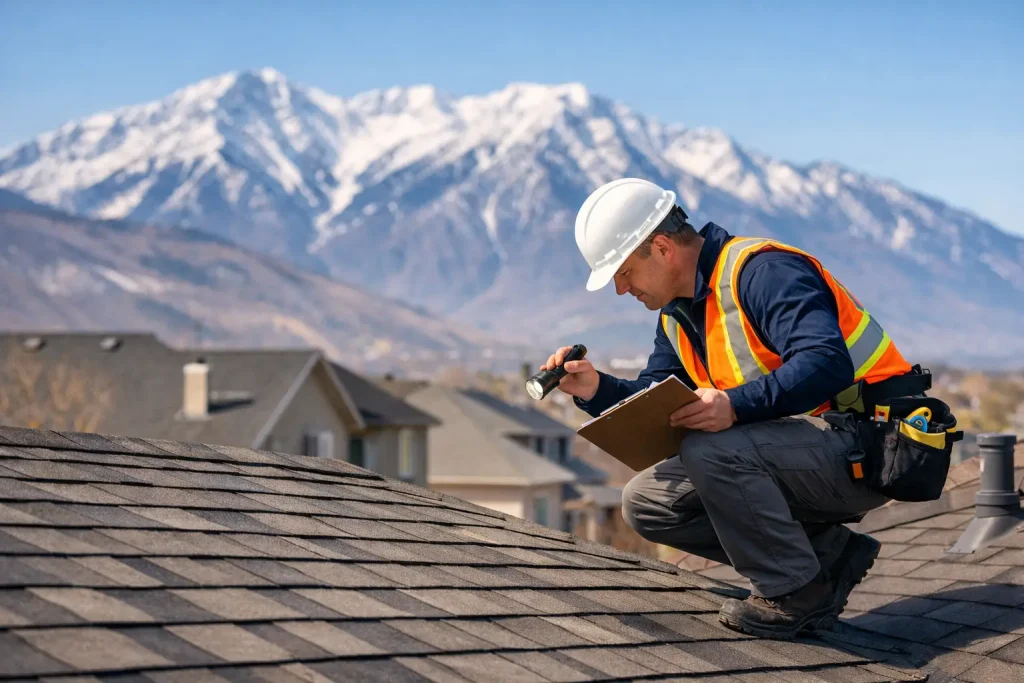
A small water stain on the ceiling rarely starts as a small problem. By the time you notice discoloration, missing shingles, or a drip after a storm, your roof may have been under stress for a while. A professional roof inspection helps you catch those issues early, before a minor repair turns into interior damage, mold, or a much larger bill.
For homeowners in Utah, that matters even more. Roofs here take a beating from sun, snow, wind, hail, and sudden weather swings. Even a roof that looks fine from the driveway can have lifted shingles, damaged flashing, soft spots, or drainage issues that are easy to miss without trained eyes.
What a roof inspection actually checks
A roof inspection is more than a quick glance at the top of the house. A thorough inspection looks at the full roofing system, because leaks and failures often start where materials meet, shift, or wear down over time.
On an asphalt shingle roof, an inspector usually checks for cracked, curling, missing, or loose shingles, granule loss, exposed nail heads, and signs of wind damage. They also look closely at flashing around chimneys, vents, skylights, and valleys, since these areas are common trouble spots. If your home has a metal or membrane roof, the inspection shifts to seams, fasteners, penetrations, and areas where water may pond or move more slowly.
The inspection should also include gutters, fascia, soffit, and visible ventilation components. Poor attic ventilation can shorten a roof’s life, especially when heat builds up in summer or moisture gets trapped in winter. In many cases, the roof covering is only part of the story.
Inside the home, signs matter too. Water stains, peeling paint, musty odors, and attic moisture can all point to roofing problems. That is why a good inspection looks at the roof as a system protecting the whole property, not just the shingles you can see from the yard.
When to schedule a roof inspection
Some homeowners wait until there is an active leak. That is understandable, but it is not the best timing if you want to keep costs down. In most cases, the best time for a roof inspection is before the problem feels urgent.
A good rule is to have your roof checked after major hail or wind events, when you are buying or selling a home, and when the roof is getting older. If your roof is over 10 years old, regular inspections become more valuable because wear tends to show up faster after that point. You should also schedule an inspection if you notice shingle pieces in the yard, granules collecting in gutters, higher energy bills, or visible sagging.
Seasonal timing can matter in Utah. A spring inspection can reveal damage from snow load, ice, and winter moisture. A fall inspection can help make sure the roof is ready for the cold months ahead. There is no single perfect month, but there is a clear advantage to checking before severe weather exposes a hidden weak spot.
Why roof inspections matter in Utah
Utah weather creates a different set of roofing pressures than milder climates. Intense summer sun can dry out and age roofing materials. Winter storms can add moisture, snow weight, and freeze-thaw cycles. Hail and strong wind can damage shingles in a single afternoon, even when the rest of the roof still looks decent at first glance.
That is one reason homeowners sometimes underestimate storm damage. You may not see a dramatic hole in the roof, but hail can bruise shingles and shorten their lifespan. Wind can break seal lines or lift edges just enough to let water in later. What starts as hidden damage can turn into a repair call months after the storm, when it is harder to connect cause and effect.
A roof inspection gives you documentation, clarity, and a realistic view of condition. That can be especially helpful if you need to decide whether a repair is enough, whether replacement should be planned soon, or whether an insurance claim may be worth pursuing.
Roof inspection findings: repair or replacement?
This is where experience matters. Not every issue means you need a full new roof, and not every repair is the smart long-term choice.
If damage is isolated, the roof is relatively young, and the rest of the system is in good shape, a repair may make perfect sense. Replacing a section of shingles, resealing flashing, or fixing a vent penetration can solve the issue without unnecessary cost. That is often the right move when the problem is caught early.
If the roof has widespread wear, repeated leaks, storm damage across multiple slopes, or signs that the materials are nearing the end of their usable life, replacement may be more practical. Paying for frequent repairs on an aging roof can add up quickly, and patchwork fixes do not always give homeowners the peace of mind they want.
There is also a middle ground. Sometimes a roof can keep going safely for a few more years, but it makes sense to budget now and monitor key areas. Honest contractors will explain that difference clearly rather than pushing a bigger project than you need.
What to expect from a professional roof inspection
A professional inspection should leave you with answers, not confusion. You should understand what was found, how serious it is, and what your options are.
In many cases, the process starts with an exterior review, then a closer examination of trouble spots and related components like gutters and flashing. If attic access is available, checking ventilation and signs of moisture can add valuable context. Photos are often part of the process, especially when storm damage or aging materials are involved.
The best inspections are straightforward. You should not feel pressured or talked around. A good contractor explains what needs attention now, what can likely wait, and what costs may look like depending on the path you choose.
That is especially important if insurance may be involved. Documentation, storm-related findings, and timing all matter. A local contractor familiar with Utah weather patterns can often help property owners understand whether damage appears cosmetic, repairable, or significant enough to support a claim.
Can you inspect your own roof?
You can absolutely spot warning signs from the ground, and homeowners should. Walk around the property after storms. Look for missing shingles, dented metal, debris buildup, sagging gutters, and anything that seems out of place. Inside, pay attention to ceilings, attic spaces, and unexplained moisture.
But climbing onto the roof yourself is another matter. Safety is the first concern, especially on steep slopes or after rain, snow, or ice. The second issue is accuracy. Many roofing problems are subtle, and it takes training to know whether a mark is normal wear, functional damage, or something in between.
So yes, homeowners can do a basic visual check. For a true condition assessment, though, a professional roof inspection is the safer and more reliable choice.
Choosing the right contractor for a roof inspection
Not all inspections are equal. Some are little more than a sales visit. Others are detailed, honest, and genuinely helpful.
Look for a local contractor with experience in residential and commercial roofing, a solid reputation, and clear communication. It helps when the company can handle the full picture, including repairs, replacement, storm damage restoration, gutters, and related exterior work. That makes the recommendations more practical, because roofing problems do not always stop at the roofline.
You should also expect responsiveness. If you are dealing with possible storm damage or an active leak, waiting days for a callback adds stress you do not need. A company like Big West Roofing, built around fast response, personalized service, and straightforward guidance, reflects what most homeowners want in these moments – clear answers, fair pricing, and work done the right way.
Roof inspection questions worth asking
Before the inspection ends, ask what the biggest current concern is, how much life the roof may have left, and whether any issues need immediate attention. Ask if the damage appears age-related or storm-related. If repairs are recommended, ask how likely they are to solve the problem long term.
Those questions help move the conversation from vague concern to a real plan. And that is the point. A roof inspection is not just about finding damage. It is about protecting your home, understanding your options, and making a smart decision before a small issue starts affecting everything underneath it.
If your roof has been through a rough season, is showing signs of age, or simply has not been checked in a while, getting it inspected now can save a lot of trouble later. Peace of mind is easier to get when you still have time to choose your next step carefully.